Chief Joseph's War Shirt by Jim Thorn
Photos courtesy of the Yellowstone Art Museum, from
the exhibition "Uncommon Ground: Selections from the William I.
Koch Collection” unless otherwise noted
Be sure to visit the Yellowstone Art Museum in
Billings, Montana or
their website.
Chief Joseph War Shirt
The Yellowstone Art Museum, located in Billings, Montana, has the
privilege of displaying a wonderful piece of Nez Perce history from
Dec. 1, 2012 through Mar 24, 2013. Part of the William I. Koch collection,
Chief Joseph’s war shirt is a rare public setting.
The story behind Joseph's shirt is remarkable and the road it took to
reach Billings is nothing short of amazing. Sent to Fort Keogh,
Montana Territory
after their surrender at Bears Paw in 1877, the Nez Perce arrived on
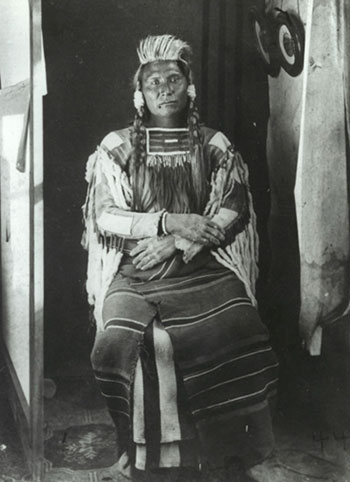
Oct. 13. Shortly after their arrival, Chief Joseph sat for John H. Fouch, who was
Fort Keogh's first photographer. The Fouch photograph of Chief Joseph is regarded as the
first ever taken of the great Nez Perce leader. Chief Joseph is seen
wearing this most famous shirt.
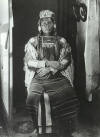
This photo of Joseph wearing
the shirt was taken in
October 1877 by John H. Fouch
photo courtesy of Dr. James Brust
The Nez Perce were relocated to Fort Leavenworth, on November 27,
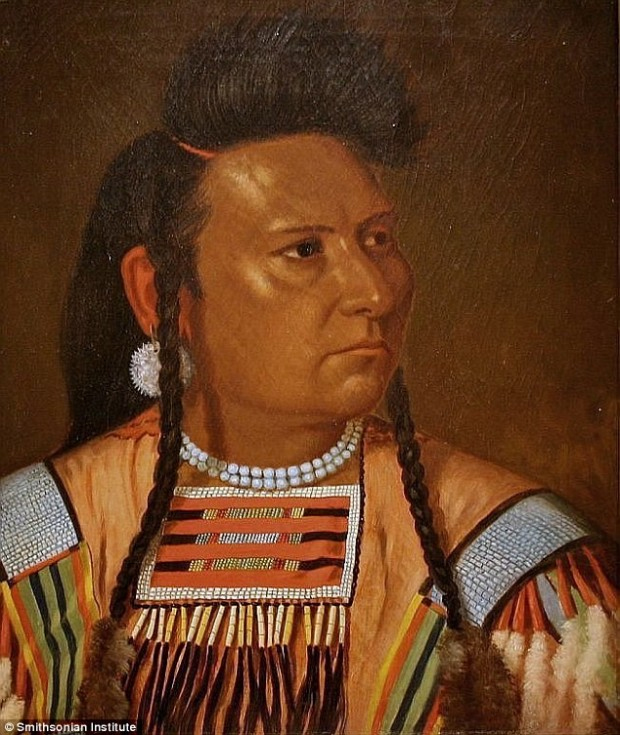
1877. The following June, Cyrenius Hall painted Chief Joseph adorned
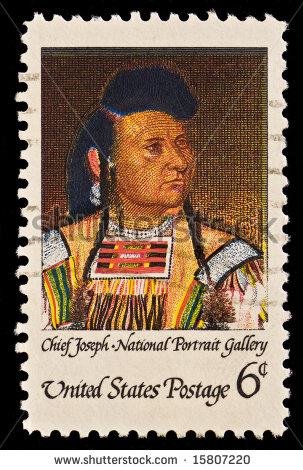
in the same shirt. Hall's painting was used as a model for a postage
stamp issued by the U.S Postal Service. The painting is displayed in
the Smithsonian.
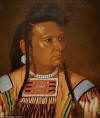
Hall
portrait of Joseph
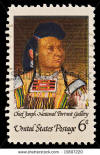
U.S. postage stamp
Conditions at Leavenworth were deplorable for the Nez Perce. Their
journey was far from over when they were again moved to the Quapaw
Indian Agency near Baxter Springs, Kansas. One year later, they again
moved to the Ponca Reservation (Oklahoma) where they would remain for
seven years.
After petitioning the government, with the help of sympathetic
officials and private citizens, the Nez Perce were returned to the
Pacific Northwest in 1885, settling at Nespelem on the Colville
reservation in Washington State.
Chief Joseph remained on the Collville Reservation until the end of
his life, never to return to his beloved Wallowa Valley in
northeastern Oregon. He died at Nespelem on September 21, 1904. The
following summer, during a ceremony of speeches and a huge giveaway by
his widow, a stone monument was erected over Joseph's grave. His
headdress and war clothing went to three nephews.
In the 1990’s, the war shirt surfaced and was sold at auction without
full knowledge of its significance. It changed hands again before the
connection to the painting and photograph was discovered. In July 2012
during an auction in Coeur d’ Alene, Idaho, William Kock made the
highest bid to become the current owner of the shirt.
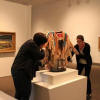
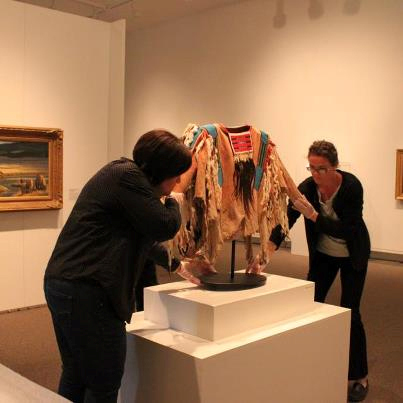
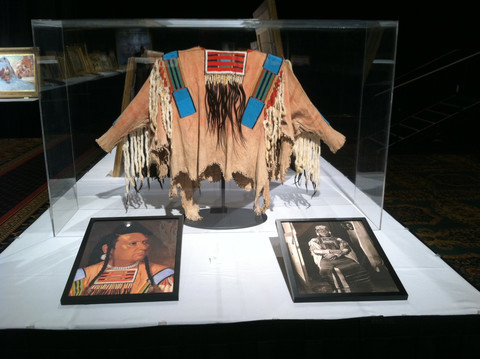
Setting the exhibit at the Yellowstone Art
Museum
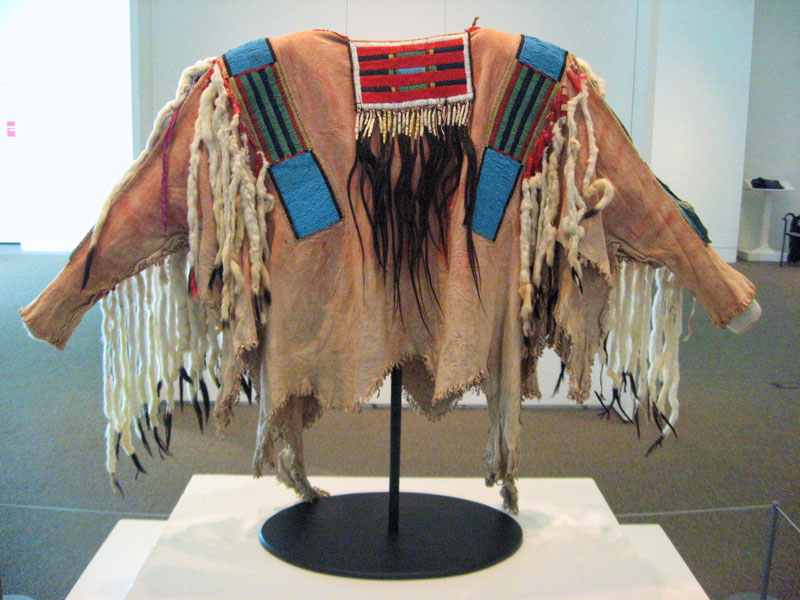
The shirt is a classic sleeved poncho type made of two soft thin
skins, probably deerskin. The shirt was made to preserve, as much as
possible, the natural shape of the animal and to honor its spirit. The
hide flap or bib is covered with red wool trade cloth and partially
beaded; it is sewn onto the front and back of the neck opening. The
long tassels of human hair would have come from family or friends,
their quill wrappings attached to the base of the neck flap. Marital
symbolism is associated with the fringes of white (winter) weasel fur
tipped with black fur of jackrabbits. These are also symbolic of the
weasel's fierce aggression and the speed of the jackrabbit.
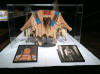
Chief Joseph War Shirt exhibit at the Yellowstone
Art Museum
The quality of the shirt is amazing considering it is at least 135
years old; it is not known when it was sewn. The shirt owes much of
its beauty to the beadwork, in addition to the sinew sewn on separate
strips of hide that cross the shoulders and down the sleeves. Warriors
kept such prestigious garments clean in saddlebags or carefully stored
while in camp. They were only worn on special occasions.
Chief Joseph’s war shirt is an incredibly well preserved part of our
history. It was a true honor to be able to view it and remember this
great man. The photographs do not do justice to the beauty of the
shirt or its artisanship.
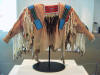
Click for larger image of the Chief Joseph War Shirt
(Back
to Top)