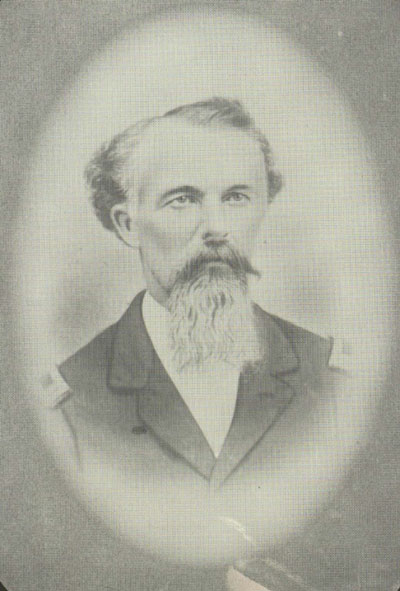
Captain William Logan: A “Brave and Sagacious
Officer” Who Died at the Big Hole, Leaving a Prominent and Enduring
Montana Legacy
By
Robert Luppi, President of Friends of Bear Paw, Big Hole & Canyon
Creek Battlefields and direct descendant of First Sergeant Patrick
Rogan and Musician John McLennon, who served with Capt. Logan at the
Battle of the Big Hole.
Captain William Logan
William Logan was born on December 9, 1832 to Scotch-Irish parents,
Thomas Dawson Logan and Frances Alice (Ellis) Logan, in the Parish of Ardee, County Louth, Ireland. Family tradition has Logan’s date of
birth to be December 9, 1830, whereas his military records show it to
be December 9, 1832. County Louth is situated on the east coast of
Ireland, on the border with Northern Ireland. It is affectionately
called “the Wee County”, being the smallest county in Ireland having a
total area of only 317 square miles.
Logan’s father, born in
Dublin, was an Anglican clergyman, a respected Rector of the Parish of
Cruicetown in County Meath and later the Parish of Charlestown in
County Louth. Logan was one of twelve children of the clergyman and
his wife, a daughter of another clergyman, and he was also the oldest.
Two of Logan’s sisters wed Anglican clergymen, further attesting to
the family’s established religious leanings. William Logan’s brother,
Charles, served as a Colonel in the Sixty-First Highlanders. Another
brother, Archibald, was a Captain in the British Navy.
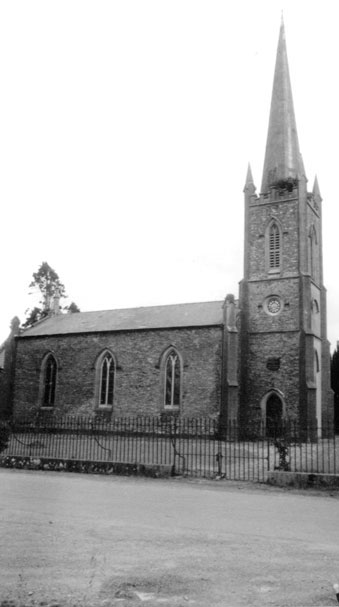
Charlestown Church, County Louth
Photo courtesy of Lilly Houtz
Logan is said to have
received a classical education in Ireland, graduating from Old Trinity
College in about 1847, one year before he immigrated to the United
States. He was the only one of his siblings to undertake that journey.
Logan’s ancestry is
traced directly to Robert de Bruce, the great Scottish soldier- king
who defeated the English at Bannockburn in 1314, thereby providing
independence of Scotland from England.
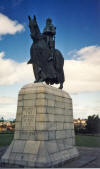
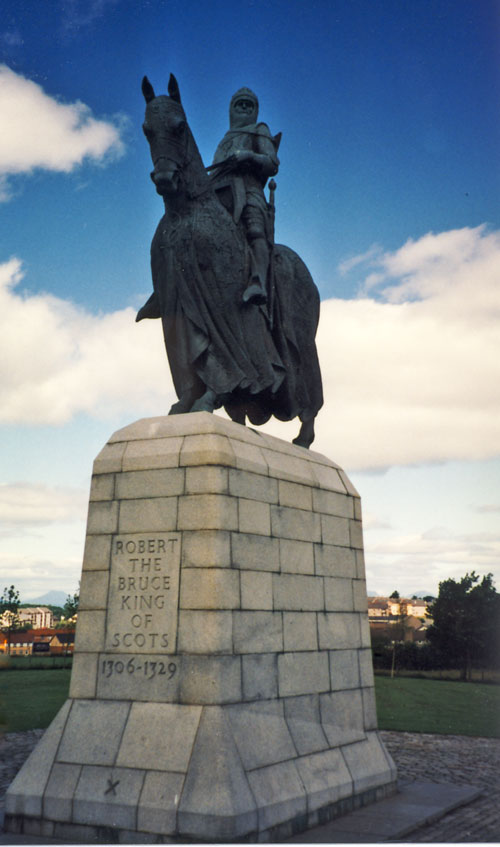
Statue Robert de Bruce at Bannockburn Battlefield
Photo courtesy Bob Reece
The Logan family lineage
to Robert de Bruce, is traced back to a Scotsman named Logan, who
after fighting the Saracens in the Holy Land as a member of the
Crusades, married the granddaughter of the Scottish king, thereby
founding a family which took for its crest a heart pierced by a
passion nail, surrounded by a belt bearing the inscription “Hoc
Majorum Virtus”. (“This is the valor of my ancestors”). It was from
that illustrious line that Captain Logan was descended.
When William Logan immigrated to America, his father gave him a seal
ring, which had been in the family for many generations. This ring
bore the above-stated inscription within a dark blue setting which
also had engraved therein a heart pierced by an arrow. Logan continued
to wear this ring on his left hand, along with a Masonic ring
presented to him when he later served in Florida during his post-Civil
War military duty until his death at the Battle of the Big Hole in
Montana Territory on August 9, 1877.
Enlistment in the 7th
Regiment of the U.S. Infantry
After he entered the
United States, Logan located himself for his first occupation in New
Orleans, where he found work at railroading, later advancing himself
to be an assistant engineer. According to family tradition, while in
New Orleans, he decided to enter military service with the 7th U.S.
Infantry Regiment, having been recruited for service in the
Mexican-American War.
The Mexican-American War
of 1846-1848, was fought in the wake of the 1845 U.S. annexation of
Texas as its 28th state. Mexico had not recognized the earlier
succession of Texas in 1836 and thereafter announced its intention to
take back what it considered a rebel province. The flashing point to
the war was a dispute over the ownership of territory between the
Nueces River and the Rio Grande River. Texas and the United States
claimed the area was theirs, while Mexico claimed to the contrary.
Fighting broke out between American forces and Mexican soldiers in the
summer of 1845, which led to the United States Declaration of War
against Mexico on May 13, 1846, followed by Mexico’s own Declaration
of War against the United States on July 7, 1846.
William Logan entered
the 7th U.S. Infantry as a Private and he continued thereafter to
serve with the 7th, achieving the rank of Captain until his death in
combat more than two and half decades after his first enlistment.
According to the Logan family oral history, Logan served in the
Mexican-American War under General Zachary Taylor on the Rio Grande
and later under General Winfield Scott until the fall of Mexico City.
The military records of the United States, however, show that Logan
first entered the Army after the Mexican-American War on December 27,
1850 when he enlisted in the 7th U.S. Infantry, thereafter joining
Company “I” of the Regiment on April 25, 1851.
While serving with
Company “I”, Logan was stationed at various posts along the Arkansas
frontier, building roads and bridges and serving as a force to inhibit
any local Indian hostilities. By October 12, 1851, Logan was appointed
Corporal and on June 26, 1853, he was promoted to Sergeant. He was
subsequently promoted to First Sergeant on June 21, 1858 and he
continued in that rank throughout the later Civil War.
While stationed along the Arkansas frontier, he met and took as his
wife, Odelia Furlong, whom he married in Texas in 1854. Odelia was a
native of Strasbourg, Alsace-Lorraine, France, but later immigrated to
Texas with her family.
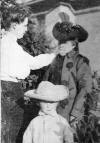
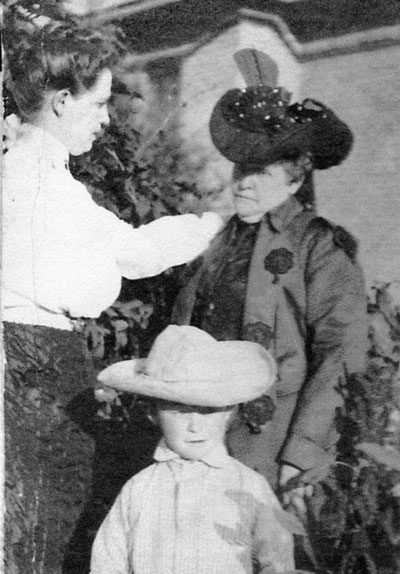
Odelia Logan at right
Photo courtesy of William Logan descendant, Dorothy Groose
Service in the War Between the States
The 7th U.S. Infantry
remained along the Arkansas frontier until 1858, when the Regiment was
ordered to Camp Floyd, Utah Territory, to participate in the show of
force toward the Mormons. Odelia Furlong-Logan accompanied then First
Sergeant Logan with his unit. In April 1860, the Regiment was ordered
to various posts in New Mexico Territory, arriving at these stations
by August 1860. Logan and his family remained in New Mexico until the
outbreak of the Civil War. News of the eastern developments and
conflicts between Union soldiers and Confederate rebels came slowly to
the western frontier posts, such as where Logan was stationed at the
time. The 7th Infantry, in anticipation of then being shifted to the
eastern war front, became concentrated at Fort Fillmore, near Las
Cruces, New Mexico and while there, served under the command of Major
Isaac Lynde. Seven of the ten companies of the 7th, were stationed at
the Fort Fillmore, First Sergeant Logan and Company “I” included. With
most of the 7th Infantry companies present at the fort, Confederate
Lieutenant Colonel John R. Baylor was ordered to capture the garrison.
Upon Baylor’s show of force, Major Lynde evacuated the garrison on
July 27, 1861 and later that day surrendered his command to the
Confederates, much to the disgust and dismay of his officers and
enlisted men. Thereafter, the seven companies of the Regiment,
including First Sergeant William Logan, were escorted to Las Cruces,
New Mexico as prisoners of war. On July 30-31, 1861, the men of
Headquarters, the band and Companies A, B, D, E, G, I, and K,
including Logan, were paroled. Subsequently, on August 10, 1861, they
arrived at the Union post at Fort Craig, New Mexico. By virtue of his
surrender, Major Lynde was summarily dismissed from military service
by order of President Abraham Lincoln and the regimental flag was
ordered destroyed by subordinate orders. The remaining companies of
the 7th, Companies C, F, and H, continued to participate in the Civil
War in the southwest theater.
While America’s Civil
War continued, the parole for the involved officers and soldiers of
the 7th Infantry expired on September 30, 1862, and in October they
were ordered to the Army of the Potomac and they joined that Army on
October 31, 1862 and then went into camp at Snicker’s Gap, Virginia.
By December 1862, the 7th was in Fredericksburg, Virginia where it
engaged in battle against the Confederates, during which First
Sergeant William Logan was severely wounded in the shoulder. He was
sent to DeCamp General Hospital at David’s Island in New York City for
medical and hospital care. As a result of the bravery and gallantry
showed by the 7th U.S. Infantry at Fredericksburg, the Regiment was
presented with new battle flags. Although Logan was then out of
action, the Regiment went on to participate in the Battle of
Chancellorsville, Virginia in May, 1863, and ultimately, concentrated
its forces at Round Top at Gettysburg, Pennsylvania, where it engaged
in action against the Confederate forces in July, 1863. After
Gettysburg, the 7th Infantry acted in pursuit of the Confederates and
engaged in action against them at Wapping Heights, Virginia. Military
records show that sometime thereafter, the Regiment was ordered to New
York City to quell draft riots and then remained there until May 1865,
when the unit was ordered to Florida as part of the Army of
occupation.
Promotion to Officer, 7th
Regiment of the U.S. Infantry
Meanwhile, First
Sergeant Logan, while in the hospital in New York City, involved
himself in an effort to seek promotion to the grade of Second
Lieutenant, after having previously applied in 1861 and again in 1862
for a commission and having been rejected because of his age on both
occasions. In Logan’s application, he cited his service and wounding
at Fredericksburg and his prior service in the United States Army,
representing also that he had been repeatedly recommended for a
commission, but that “in consequence of my age at the time of my 1st
enlistment, having been recorded as 21 when I was only 18 years, I was
rejected by the Department as being too old for a candidate for
appointment.” First Sergeant Logan went on to state in his application
that “deeming the decision as final I applied for and obtained an
appointment as Hospital Steward, but I find that accustomed as I have
been to active military life from my boyhood, I cannot settle down at
the age of 30 years to the comparatively sedentary life which I now
lead.”
Logan also had
supporting character testimonials and recommendations to support his
application. These included by his father, Rector Thomas Dawson Logan,
stating that William had a first rate classical education and “that
his two brothers, Thomas and Charles, hold commissions as Lieutenants
in the British Army and that...Testimonials were given to one of them
when seeking an appointment in the English Police Force as a guarantee
of the respectability of his family and connections, which of course,
will hold equally good with regard to his elder brother” (William). A
further testimonial was made by Logan’s immediate supervisor, Surgeon
F. Simmons, U.S.A., who stated “Mr. Logan entered the service at an
early age and was soon after made Orderly Sergeant of Major Paul’s
Company of the 7th Infantry....When so many persons less qualified are
procuring commissions in the Army, I think it a pity that the
government should lose the services of so good a soldier, because he
has no friends to press his claim… that he fills a position below his
merits.” Major Paul himself, then appointed as a Brigadier General of
Volunteers, also wrote, “William Logan, now a First Sergeant of
Company “I”, 7th Regt., U.S. Infantry, has served under my immediate
orders for many years, and that his education, conduct and military
bearing have been unexceptionable. I have no hesitation, therefore in
recommending him to the War Department, for the commission of Second
Lieutenant in the regular army, for which I believe him to be very
well qualified.” A further recommendation was made by Captain Charles
B. Stevens, commanding the 7th Infantry in 1862, who stated, “I have
known 1st Sergeant William Logan of Co.7th “I” Infantry for six years
and take pleasure in recommending him as a person in every respect,
well qualified for the position of Lieut. in the Army.” In what has
been described as probably a key letter in support of Logan, was one
dated August 8, 1862 by W. A. Wheeler, a member of Congress, who
declared: “Revering to the testimonials of First Sergeant William
Logan, 7th U. S. Infantry--- endorsed by me. I beg leave to say that
his promotion would be an act of justice to an intelligent and
efficient solider, and particularly acceptable to.” This letter was
sent to the Secretary of War.
Thereafter, on February
26, 1864, William Logan was ordered to Washington D.C. for an
appearance before an Examination Board of officers, which was held on
March 10, 1864. Included as an addition to Logan’s file at that time,
was a letter dated January 10, 1864 from Ft. Schyler, New York. It
read “The undersigned of the 7th U.S. Infantry… Hosp. Steward Wm.
Logan… represent that the regimental record of this soldier and
valuable noncommissioned officer is unexceptionable, and that his education,
habits, and acquirements qualify him for promotion”, the letter adding
the request that William Logan be appointed and assigned to the 7th
U.S. Infantry. The letter was signed by several army officers,
including First Lieutenant J. Sanno and Second Lieutenant Constant
Williams, officers who coincidentally later served and fought
alongside Logan at the time of his death at the Battle of the Big Hole
some thirteen years later.
The examining Board
reviewed and evaluated Logan’s qualifications to be an officer in the
United States Army, having considered his military record, his
physical ability, his moral character, his knowledge of geography,
history and mathematics, his knowledge of orthography and composition,
as well as infantry, artillery and cavalry tactics, thereupon passed
and recommended William Logan to the United States Senate for
promotion to Second Lieutenant, Infantry. Logan was commissioned a
Second Lieutenant, Infantry on June 7, 1864 at David’s Island, New
York City and was assigned to the 7th Infantry. His first duty station
as an officer involved a recruiting service assignment at Erie,
Pennsylvania. Thereafter, while the 7th Infantry was stationed at St.
Augustine, Florida, Second Lieutenant Logan was recommended for
promotion to First Lieutenant and that of Regimental Quartermaster. He
accepted his promotion on September 26, 1865 with his new rank dated
from May 18, 1865(?).
In April, 1869, the 7th
Infantry, including First Lieutenant William Logan, was ordered to
relocate from Florida to the West, first to Fort Fred Steele, Wyoming
Territory, then to Fort Buford, Dakota Territory and then by 1872, to
Fort Shaw, Montana Territory. From 1872 to 1874, while technically
stationed at Fort Shaw, Logan was detailed to engage in recruiting
service at Dubuque, Iowa. Upon his return to Montana, he was notified
of his pending promotion to Captain, 7th U.S. Infantry, and that
promotion became effective on January 5, 1875. Logan thereupon became
the commanding officer of Company “I” of the 7th. Twenty-four years
had thus elapsed between the time William Logan had joined the
Regiment to the time of his promotion to Captain, his final rank in
service.
Service in the
Sioux/Cheyenne War of 1876
The year 1876 was a
tumultuous year for the military and American Indians in the West. The
Sioux Indians and the Northern Cheyenne had refused government orders
to return to their reservations earlier that year. The plan of
operation by the American military to force the Indians back to the
reservations was devised in the nature of a great pincer movement
involving three columns of troops. One column, known as the Dakota
Column, would journey westward from Fort Abraham Lincoln in Dakota
Territory under the command of Brigadier General Alfred H. Terry,
which included twelve companies of the 7th Cavalry Regiment under the
command of Lieutenant Colonel George A. Custer. A second column,
designated the Southern Column, and commanded by Brigadier General
George Crook, would leave Fort Fetterman in Wyoming Territory and
proceed northward, while a third column, the Montana Column, commanded
by Colonel John Gibbon, and comprising six companies of the 7th U.S.
Infantry Regiment and four companies of the 2nd U.S. Cavalry from
Forts Shaw and Ellis, Montana Territory, would advance eastward.
Captain William Logan commanded Company “A” of the 7th on this
journey, the unit consisting of two officers and twenty-three enlisted
men. It was hoped that somewhere in the wild country between the
Little Missouri River and the Big Horn Rivers the hostile band of
Sioux and Northern Cheyenne would be rounded up and either destroyed
or forced to return to their reservations.
On March 17, 1876, the
six companies of the 7th U.S. Infantry, including Company “A” and
Captain William Logan, marched from Fort Shaw and then joined troops
of the 2nd Cavalry at Fort Ellis, and together they traveled eastward
in anticipation of joining in the battle against the Sioux and
Northern Cheyenne under the planned combined attack. Logan’s oldest
son, Will (William R. Logan), was a member of the Column, serving as a
scout during the expedition.
The progress of the
Column experienced hardships, tribulations, frustrations, and triumphs
in its journey, as are graphically shown through the written narrative
of Lt. James H. Bradley of the 7th U.S. Infantry in his classic
journal of the life of the expedition, as well as his observations and
commentary on Montana’s frontier life, and its history and events,
which he penned under the title “Journal of the Sioux Campaign in
1876; With Historical Sketches of the Country Traversed, and Outline
Histories of the Sioux and Crow Indian Tribes”. Captain Logan’s
company, along with the rest of the force, traveled for over three
months and in the words of the writer Edgar I. Stewart in his
commentary on the Lt. Bradley narrative, the Column at the time was
“subjected to the vicissitudes of the weather, ranging from deep snow
and sub-zero temperatures of a Montana winter to the blistering,
searing heat of mid-summer, with hail storms and cloud bursts, all
faithfully recorded” (by Bradley). The command also took them through
an assortment of various terrains and waters, some treacherous and
challenging, as they steadfastly marched onward in their journey.
Bradley’s vivid account included a description of the conduct and
interactions among the soldiers, their Crow Indian scouts and the
white settlers and small bands of hostile Sioux during the Column’s
advance, which included also some mention of various actions of
Captain Logan and his Company ‘A” soldiers as well as of Logan’s son,
Will. Lt. Bradley demonstrated his esteem for Logan, as he pointedly
called him a “brave and sagacious officer.” And according also to the
author, John F. Finerty, the Captain was a “very noted officer” and
was also “affectionately known to the whole army by the ‘sobriquet’ of
“Sage Brush Bill.”
History shows that
neither the Montana Column nor General Crook’s Southern Column united
with Custer’s cavalry in Custer’s attack on the Sioux and the Northern
Cheyenne in late June, 1876. General Crook’s forces were earlier
subjected to a surprise attack by a band of Sioux Indians and Northern
Cheyenne along Rosebud Creek on June 17, 1876, thereby causing the
General and his Column to return to their Big Goose Creek encampment
to await reinforcements. As to Gibbon and his Column, they arrived at
the scene of Custer’s battle at the Little Bighorn River some
thirty-six hours late, only to bury the dead cavalrymen and rescue the
survivors. While at the scene, they also engaged in the destruction of
a large quantity of property abandoned by the Indians in their hasty
departure. Captain William Logan and soldiers from his Company “A” of
the 7th U.S. Infantry Regiment would have likely assisted in these
responsibilities as well as the preparation of the wounded soldiers
for transport and their conveyance to the steamer Far West which was
embanked at the mouth of the Little Bighorn River.
Death of Captain Logan at
the Battle of the Big Hole
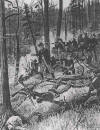
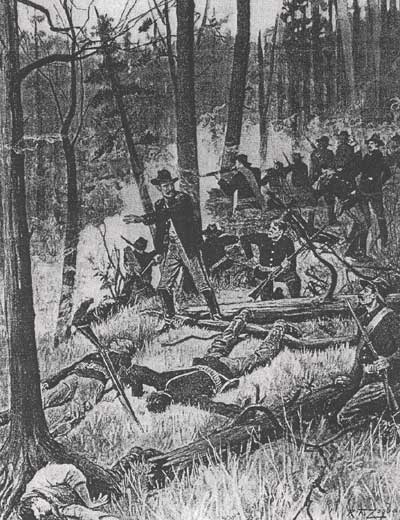
Battle of Big Hole. Artistic rendering appeared in Harper's Weekly
December 28, 1895
After Little Bighorn, William Logan continued to serve with Company
“A” of the 7th U.S. Infantry in western Montana. In the summer of
1877, one year after the Custer debacle, troops consisting of soldiers
from the 7th Infantry and 2nd Cavalry from Fort Shaw, Fort Missoula
and Fort Ellis, Montana Territory, were ordered to pursue a large band
of Nez Perce, including its renowned leaders, Chief Joseph, Chief
White Bird and Chief Looking Glass, who refused to return to their
reservations in Idaho. The troops included Captain Logan and his
Company “A”. Previously, in June and July 1877, the Nez Perce had
fought a series of battles and skirmishes with the military, including
at White Bird Canyon and on the Clearwater River in Idaho. The
military force gathered together to form a battalion at Fort Missoula,
Montana under the leadership of Colonel John Gibbon, the commander of
the Montana Column the previous year, and they left the garrison on
August 4, 1877. A scouting party led by Lieutenants Bradley and Jacobs
was sent ahead to search for the Nez Perce and did so on August 8,
1877. The Indians were found to be encamped in a meadow beside the
North Fork of the Big Hole River, not far from the present town of
Wisdom, Montana in the Big Hole Valley, situated in the southwest part
of the Territory. Colonel Gibbon ordered a line of battle to be formed
by his columns of infantrymen directly opposite the Indian village in
the early morning hours of August 9, with a plan of attack scheduled
for dawn that morning. Citizen volunteers, who accompanied the
military, would also join in the attack. Captain William Logan and his
Company “A” of the 7th were stationed in support of other columns of
soldiers that formed the line of attack. In accordance with their
orders, the units of soldiers gathered themselves across the river
from the Indian encampment in readiness for their assault and were so
secreted and obscured by the cover of the terrain and the darkness, as
not to be noticed by the Nez Perce warriors and their women and children,
who thought themselves immune at the time from surprise attack.
The Battle of the Big
Hole commenced at about daybreak when an Indian named Wetistokaith
rode horseback towards the soldiers while on his way to the Indian
pony herd that was situated on the hillside above the village. Several
shots were fired by the soldiers at the Nez Perce horseman, instantly
killing him. Immediately thereafter, the columns of soldiers advanced
rapidly toward the Indian encampment, crossing the Big Hole River, and
traversing the waters of a slough and the thickets of willows that
formed along and near the river’s banks. The soldiers directed volleys
of fire into the village while they moved forward. The infantrymen
received immediate support from Captain Logan’s Company “A” after they
came under fire, the Company being sent in on the run to the extreme
right. The battle in the meadow was marked by hand to hand fighting
and the use of weapons at close quarters, which inflicted great
carnage among the warriors and soldiers and also Nez Perce women and
children. In the first twenty minutes of the battle, Captain William
Logan himself met the same fate as thirty other soldiers, five
citizen volunteers, an Army guide, as well as an estimated sixty to
ninety Nez Perce, who died in the conflict, which lasted throughout
the day and night and into the following night within the confines of
the meadow and later, the wooded bluff area, to which the soldiers
retreated after their earlier fighting. The battle ended when the Nez
Perce withdrew and moved southward to avoid later battle with military reenforcements sent under the command of General O. O. Howard.
(Webmaster's Note:
Jump to a photographic tour of the Big Hole Battlefield)
The death of Captain
Logan is recounted in a story published by an Indian trader named
Duncan McDonald and is mentioned also by the author G. O. Shields in
his 1889 narrative entitled “The Battle of the Big Hole.” Logan was
shot and died during a fight among the tipis. According to McDonald:
In a fight between an officer and the warrior the warrior was shot
down dead. The warriors sister was standing by him when he fell, and
as he lay there, his six-shooter lay by his side. The woman seeing her
brother dying and the blood running from his mouth, seized the
six-shooter, leveled it at the officer, fired, and shot him through
the head and killed him. From all the information I can obtain, I
believe the officer was Captain Logan.
Shields had described Logan’s actions in the fight before he fell as
one acting “with a valor equal to his illustrious namesake” adding
also that he was mourned by his soldiers “as the gallant Captain
Logan.” The warrior earlier shot and killed by Logan was identified to
be that of Wahlitits.
In the aftermath of the
battle, the dead soldiers, including Captain Logan, and civilian
volunteers, were buried in shallow graves in the battlefield. Captain
Richard Comba, the commander of Company “D” at the Big Hole, was in
charge of this detail, a particularly grim assignment it must have
been for him as Logan was his father-in-law.
In September 1877, a
burial party left Fort Missoula and visited the battlefield to rebury
the dead soldiers. The detail included Lieutenant John T. Van Orsdale
of Company “D”, 7th Infantry, another participant in the earlier
battle and also a son-in-law of Captain Logan. The Lieutenant found
fourteen burials disinterred, including that of William Logan, and the
remains were brought to Deer Lodge, Montana, for temporary burial in
the local cemetery.
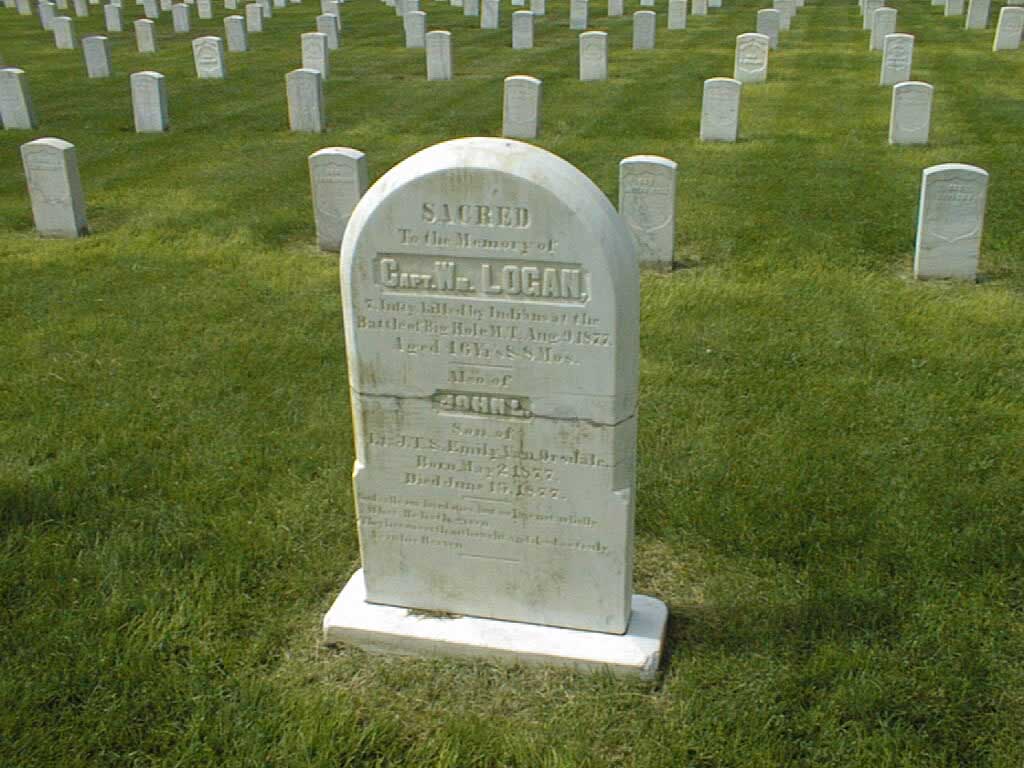
In 1892, Logan’s remains
were removed from Deer Lodge and reburied at
Custer National Cemetery inside the Little Big Horn Battlefield National Monument in Montana, along with
the remains of Lieutenant Van Orsdale’s first wife and infant son.
Their remains rest there today.
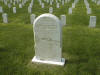
Captain William Logan Gravesite
Custer National Cemetery
Soldier rest! thy warfare o’er,
Sleep the sleep that knows not breaking;
Dream of battlefields no more,
Days of danger, nights of waking.
Sir Walter Scott
The Logan Rings: Their
Disappearance and Their Recovery
At his death, Captain
Logan wore two rings on his left little finger, the seal ring with the
Logan crest, given to him by his father, and a ring comprising a plain
band covered with Masonic emblems in enamel. The latter was presented
to him in Florida where he had been a worshipful master of the Masonic
lodge during his post- Civil War duty with the 7th Infantry as a
member of the Army of occupation. Both rings, along with his little
finger, had been removed from Logan’s left hand prior to the arrival
of Lieutenant Van Orsdale’s reburial party to the Big Hole battlefield
some weeks after Logan’s death.
The rings were important
to Logan’s family, including Odelia Logan, Logan’s wife. Odelia,
placed advertisements seeking their return in the Army And Navy
Journal and in various territorial newspapers. Some twenty-three years
elapsed before both rings were recovered by the Logan family and they
were finally recovered in this manner, as narrated in the work “The
Big Hole Battlefield” by Earle R. Forrest as follows:
…some three years after the Battle of the Big Hole, a Nez Perce killed
by Blackfeet near the Canadian border, wore the seal ring. It passed
from hand to hand among the Blackfeet until it finally came into the
possession of a trapper. One day when the latter was in Fort Benton,
Billy Todd, who knew the story of the rings and was an old friend of
Captain Logan, saw the seal band on the trapper’s finger, and bought
it. Then he sent it to the commanding officer of Cantonment Badlands
on the Missouri River (North Dakota), with the request that it be sent
to Mrs. Logan. The C.O. (sent) the missing ring to Mrs. Logan in
Helena. For twenty-three years all trace of the Masonic ring was lost
until one day in 1900, William R. Logan, a son of Captain Logan,
noticed a band ring on a finger of a Piegan squaw who came into his
office at the Blackfoot Agency to lodge a complaint. Always on the
lookout for his father’s ring, Logan recognized the badly worn
outlines of Masonic emblems when he examined it. He purchased the ring
and turned it over to his mother. The squaw told him how it came into
her possession. Some time after the Battle of the Big Hole, a Piegan
hunting party met a band of Nez Perces and several Indians of both
tribes were killed in the ensuing battle. A dead Nez Perce wore the
Masonic ring which a Piegan warrior cut from his finger. The Piegan
wore the ring until his death, and then the Squaw from whom Logan
purchased it, inherited it. She was probably his wife.
The Logan rings remain
in the possession of his family to this day.
The Legacy of Captain
William Logan
William Logan left a
legacy deeply entrenched in the history and culture of the State of
Montana that continues to this day, serving as a testament to his
respected and admired stature and also to the later accomplishments
and prominence of his children.
During Montana’s Indian
War era, in 1869, Camp Baker was established near the Smith River and
within the confines of what is known today as Meagher County for the
primary protection of the mines at and near Diamond City and the Fort
Benton to Helena freight route. The fort was garrisoned predominately
by members of the 7th U.S. infantry, but also at times by members of
the 3rd and 18th Infantries. Captain Logan served there himself as the
commanding officer in the 1870’s. In 1878, one year after Logan’s
death and in his memory, the post was renamed Fort Logan. Two years
later, by order of the War Department, the fort was abandoned by the
military and the troops were relocated to another garrison in Fergus
County. In Logan’s memory and as a dedication to the historic post, a
bronze tablet was emplaced in 1924 on the only remaining standing
building at old Fort Logan and it remains there today. In 1970, the
fort was added to the national Register of Historic Places.
As a further tribute to Captain Logan’s memory, the town of Logan,
Montana adopted his name in his honor when it was established on the
Gallatin River in 1889 as a railroad station for the Northern Pacific
and Montana Railway (later the Northern Pacific Railway). The right of
way of the Northern Pacific was acquired from Logan’s widow, Odelia,
in 1885. Logan was an important junction on the Northern Pacific’s
Rocky Mountain Division, where the westbound trains could diverge
north to the line to Helena, Montana and Mullen Pass, or south to
Butte, Montana via Homestake Pass. In addition, the Northern Pacific
operated a secondary freight-only line between Logan and Bozeman,
Montana from the 1920s through the 1950s. Today, Logan, Montana
remains a part of the Montana Rail Link.
At Captain Logan’s
death, he left his wife, Odelia, and several children, as well as his
sons-in-laws, Captain Richard Comba and Lieutenant John T. Van Orsdale.
The two officers continued to serve in the military and later retired
from the army respectively, as a Brigadier General and Lieutenant
Colonel. The widowed Odelia Logan moved to the vicinity of Helena,
Montana Territory and engaged in stock raising. Two of William and
Odelia’s sons, Thomas A. Logan and Archibald Logan, would later
participate in the Spanish-American War.
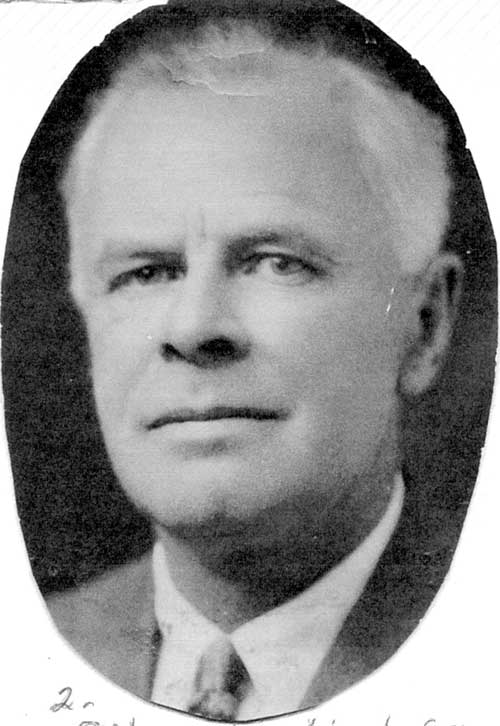
Another son of William
Logan, Sidney M. Logan, who was age 10 at the time of his father’s
death, became a practicing attorney in Helena. In 1891, Sidney became
the first county attorney of Flathead County and later, in 1902, was
elected Mayor of Kalispell. Largely due to his efforts, a system of
parks and boulevards was established in the area and he was also
instrumental in securing the Carnegie Library for the city. Included
in his service to the community were his tireless efforts to complete
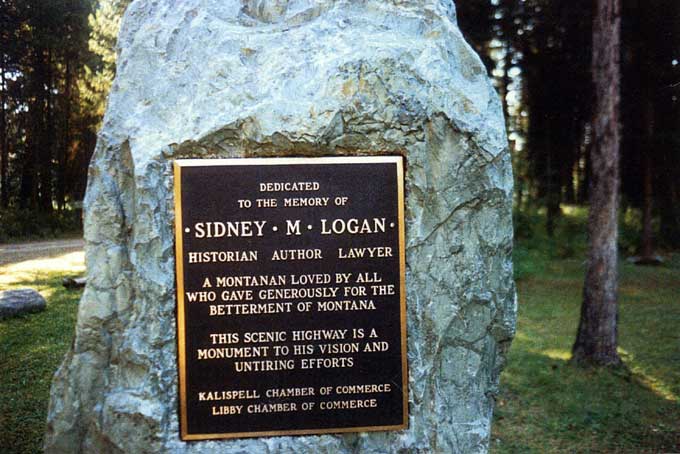
scenic Highway 2 in Montana, westward to the Idaho line. A bronze
plaque erected by the Kalispell & Libby Chamber of Commerce, was later
emplaced in his memory along the roadway with an inscription honoring
his vision, generosity and untiring efforts for the betterment of
Montana. Logan State Park on the shores of Middle Thompson Lake along
the highway is also named in Sidney's honor. Credit in large measure should also be given to him and his
brother, William R. Logan, for the creation of Glacier National Park,
as they both lobbied for the legislation to establish its formation.
At the same time, Sidney provided critical information primarily
relating to its boundaries. Sidney Logan married a niece of former
Montana Governor, Joseph Toole, and they had five children. He died in
1935.
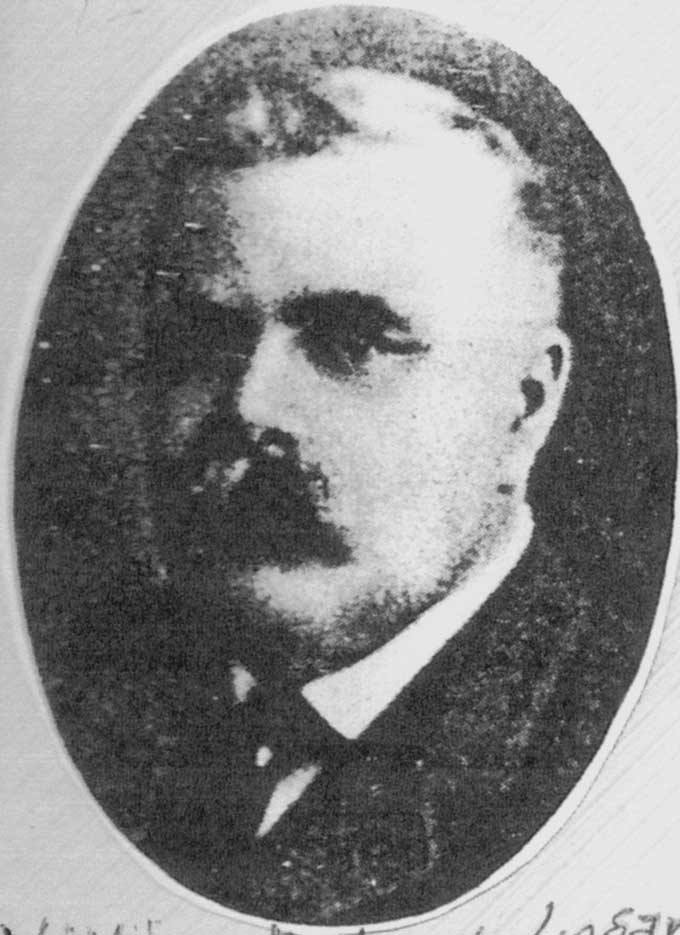
Captain Logan’s eldest
son, William R. (“Will”) Logan, was born in 1856 and attended college
in Missouri. He served as a scout in the Sioux/Cheyenne campaign of 1876. In
1877, he held the office of Post-Trader at Fort Missoula and in 1898,
was appointed an Indian Agent for the Blackfoot Indian Reservation. He
was known to have explored the region of what is now Glacier National
Park in the 1880’s and became enamored with its uniqueness and beauty.
Along with his brother, Sidney, he was greatly responsible for the
creation of this iconic national treasure, becoming its first
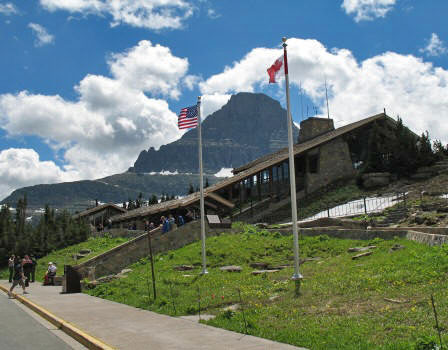
Superintendent in 1910. Logan Pass, along the Continental Divide in
Glacier National Park, is named after him in his honor.
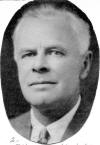
Sidney M. Logan
Photo courtesy of William Logan descendant, Dorothy Groose
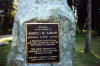
Sidney M. Logan Memorial Plaque, Highway 2, Montana
Photo courtesy of William Logan descendant, Dorothy Groose
Captain William Logan would be pleased with the lives and achievements of his sons. The Rector Thomas Dawson Logan of Ireland
likely accorded the same to his eldest son, who left his large family
and journeyed to the New World at a young age, and there while in
uniform for virtually the duration of his life, served his adopted
country with fearless diligence up until the moment of his final
breath. And it was especially in the Captain’s last moments, in the
harsh dissonance and fury of battle under an early morning Montana
summer sky, that the solemn expression portraying his sacred ancestral
tradition, “Hoc Majorum Virtus” (“This is the valor of my ancestors”),
was honored and adopted as well by the actions of the Captain himself.
William Logan left his life on the battlefield, but by his esteemed
and valorous reputation, and through the notable accomplishments of
his progeny, he also left a prominent and enduring Montana legacy.
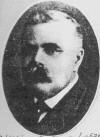
William R. Logan
Photo courtesy of William Logan descendant, Dorothy Groose
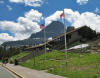
Logan Pass Visitor Center, Glacier National Park
Author’s Note:
The author extends his special thanks to Mrs. Dorothy Groose and to
Mrs. Lilly Houtz, a great-granddaughter and the widow of a great-grandson
of William Logan respectively, who kindly provided me family
photographs and documents pertaining to the lives of William Logan and
his family members and descendants. Special thanks is also extended to
Ms. Tami DeGrosky, the former Superintendent of Big Hole Battlefield
National Monument, for providing me a copy of the personnel file
of William Logan.
Bibliography
Rev. J.H. Leslie, "Armagh Clergy &
Parishes”, (1913), p. 175 and its “Supplement to Armagh Clergy &
Parishes” by Rev. James B. Leslie, M. A., D. Litt., M.R.I.A (W.
Tempest, Dundalgan Press, Dundalk, 1948) p.64;
Internet website, "en.wikipedia.org:
for County Louth, Robert de Bruce, Mexican-American War, Logan,
Montana; Battle of the Rosebud";
John F. Finerty, “Warpath and Bivouac: or The Conquest of the Sioux” ,
(Donohue and Henneberry Publishers, 1890), p.301;
Audrey L. Haines, “An Elusive
Victory- The Battle of the Big Hole” (Glacier National History
Association, 1991), pp.45, 48, 49, 51-58, 61-62, 66, 108, 110, 116,
121-122, 125-127;
G.O. Shields (“Coquina”), "The Battle
of the Big Hole", (Chicago and New York: Rand, McNally & Company, 1889)
pp. 50, 53;
Internet website, fortwiki.com: Forts, Camps and Stations – Fort
Logan;
Internet website,
"legendsofamerica.com: Montana Forts of the Old West- Fort Logan";
Peter F. Panzeri, Little Big Horn,
1876 – Custer’s Last Stand (Osprey Printing Limited, 1995), pp. 14-15,
33-34, 36, 46, 75, 82, 83, 85;
Letter, Col. John Gibbon, 7th U.S.
Infantry, to Adjutant, Department of Dakota(Major George D. Ruggles),
October 17, 1876, included in "The Little Big Horn 1876, Official
Documents of the Little Big Horn", compiled/annotated by Lloyd J. Overfield, II ( Bison Books, 1990) pp. 78-92;
"The March of the Montana Column",
edited by Edgar I. Stewart (University of Oklahoma Press, 2001), p.
XII, XIX, 50-51, 58-59, 68, 93, 130, 159;
Jerome A. Green, "Nez Perce Summer
1877" (Montana Historical Society Press 2000), pp. 25-42, 73-96, 139;
Robert D. Warden, “Old Fort Logan in
Meagher County is Formally Dedicated as Landmark of State by Daughters
of American Revolution” in Great Falls Tribune, August 24, 1924;
“Dedicatory Address of Sidney M.
Logan on Occasion of Unveiling of Bronze Tablet at Fort Logan Teems
With Military Traditions”, in The Helena Daily Independent, August,
1924;
Mel Ruder, “Major Logan’s Last
Anecdote Recalled”, in Hungry Horse News, August 4, 1967;
“Site of Ft. Logan is Dedicated by
Orofino D.A.R.” in Philipsburg Mail, August 22, 1924);
Sidney M. Logan Obituary, in Daily
Inter Lake newspaper, August 29, 1935;
Letter, William Logan descendant,
Raymond A. Thon, to Robert C. Harden, Superintendent, Glacier National
Park, West Glacier, Montana, June 8, 1983, included in William Logan
personnel file, Big Hole Battlefield National Monument;
Typed research manuscript (10
pages-author and date unknown) entitled: “William Logan, Captain,
Company “I”, 7th U.S. Infantry: Killed at the Battle of the Big Hole,
August 9, 1977”, included in William Logan personnel file, Big Hole
Battlefield National Monument;
Duncan McDonald, “The Nez Perce
Indian War of 1877 - - The Inside History from Indian Sources” The New
North- West, Deer Lodge, M.T., January 24, 1879;
Earle R. Forrest, “The Big Hole
Battlefield”, 1962, manuscript in the Big Hole Battlefield National
Monument Library, p. 59;
John M. Carroll and Byron Price, Roll
Call on the Little Big Horn, 28 June 1876, (The Old Army Press, 1974),
p.140.
Report, Major Isaac Lynde, Seventh
U.S. Infantry to The Acting Assistant Adjutant General, Department of
New Mexico, Santa Fe, August 7, 1861, regarding his retreat and
surrender at Saint Augustine Springs, found in the City of Las Cruces,
New Mexico website of www.las-cruces.org.
2009 Copyright Robert Luppi
(Back
to Top)
Back
to the Nez Perce Battles